
How do beauty salons handle calls and bookings without constant interruptions?

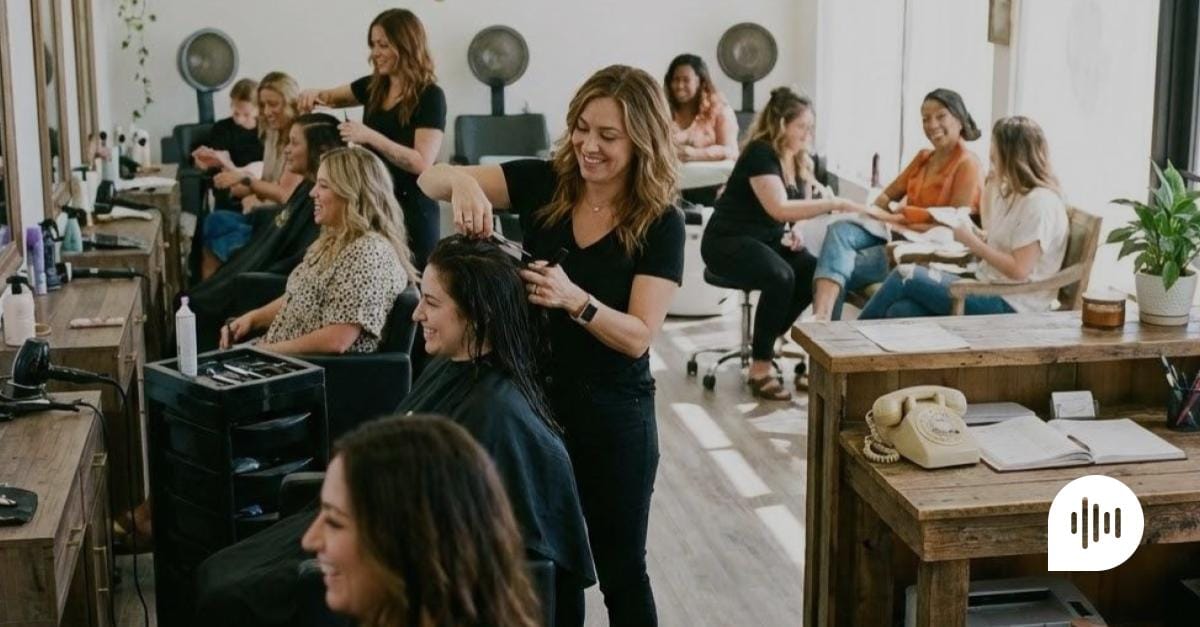
If you work in a beauty salon, a hairdresser, or a wellbeing centre, this situation is probably very familiar.
You’re in the middle of a service, focused on the person in front of you. Your hands are busy, you’re concentrating, and the flow is good. Then the phone rings. You know it might be a booking, a change, or a “quick question” that rarely stays quick. For a second, you hesitate: do you answer, let it ring, or try to handle it without breaking concentration?
Whatever you choose, the interruption has already happened. And this doesn’t occur once or twice a day. It repeats constantly, especially during the busiest hours.
That tension between doing the work properly and staying responsive to clients is part of everyday life in most salons.
Why do phone calls and messages disrupt day-to-day work in beauty salons?
Most beauty businesses operate with several tools and channels that are not connected. There is usually a calendar somewhere, calls coming in during peak hours, WhatsApp messages waiting for a reply, and a set of rules that everyone more or less knows by heart.
In practice, this often looks like:
- calls coming in while a service is in progress
- messages waiting for a reply with no clear owner
- a calendar that lives separately from conversations
- rules that exist, but only in people’s heads
When everything happens at once, responding properly means stopping what is happening on the salon floor. As a result, some calls are missed, others are answered in a rush, and the quality of the response depends heavily on who happens to pick up.
This is the consequence of a system that forces people to translate information constantly: from a call to a calendar, from a message to a decision, from memory to action.
Why don’t online booking links fully solve booking and call issues in salons?
Many salons try to reduce this pressure by adding an online booking link, and that does help to some extent. However, it rarely removes the need for calls.
In beauty services, appointments are often tied to uncertainty. Clients are not always sure which service they need, how long it will take in their specific case, or whether they can book with the same stylist as last time. Changes, delays and last-minute questions are also common, and those situations usually lead people to call or write directly.
When those calls and messages are handled separately from the calendar and the business rules, the interruptions continue. Automation does not fail because clients refuse to use links, but because availability, information and communication are not working from the same base.
How does Heydiga manage calls and bookings for beauty salons?
Heydiga brings everything together in one place. It is where a salon defines how it works, and where calls and messages are handled using that same information.
Inside Heydiga, the salon sets up its services, durations, opening hours, team availability, and practical rules around changes or cancellations. It also includes the answers to the questions clients ask every day, so that responses are consistent and up to date.
Once that context lives in one single place, the voice and messaging agent can handle incoming calls and messages using real availability and real rules. Clients continue to contact the salon in the way that feels natural to them, while the team no longer has to interrupt their work to check calendars or clarify details.
At the end of the day, everything that happened is already there, without having to reconstruct conversations from memory.

What does Heydiga look like inside a beauty salon?
From the salon’s point of view, everything related to communication and bookings lives in one place.
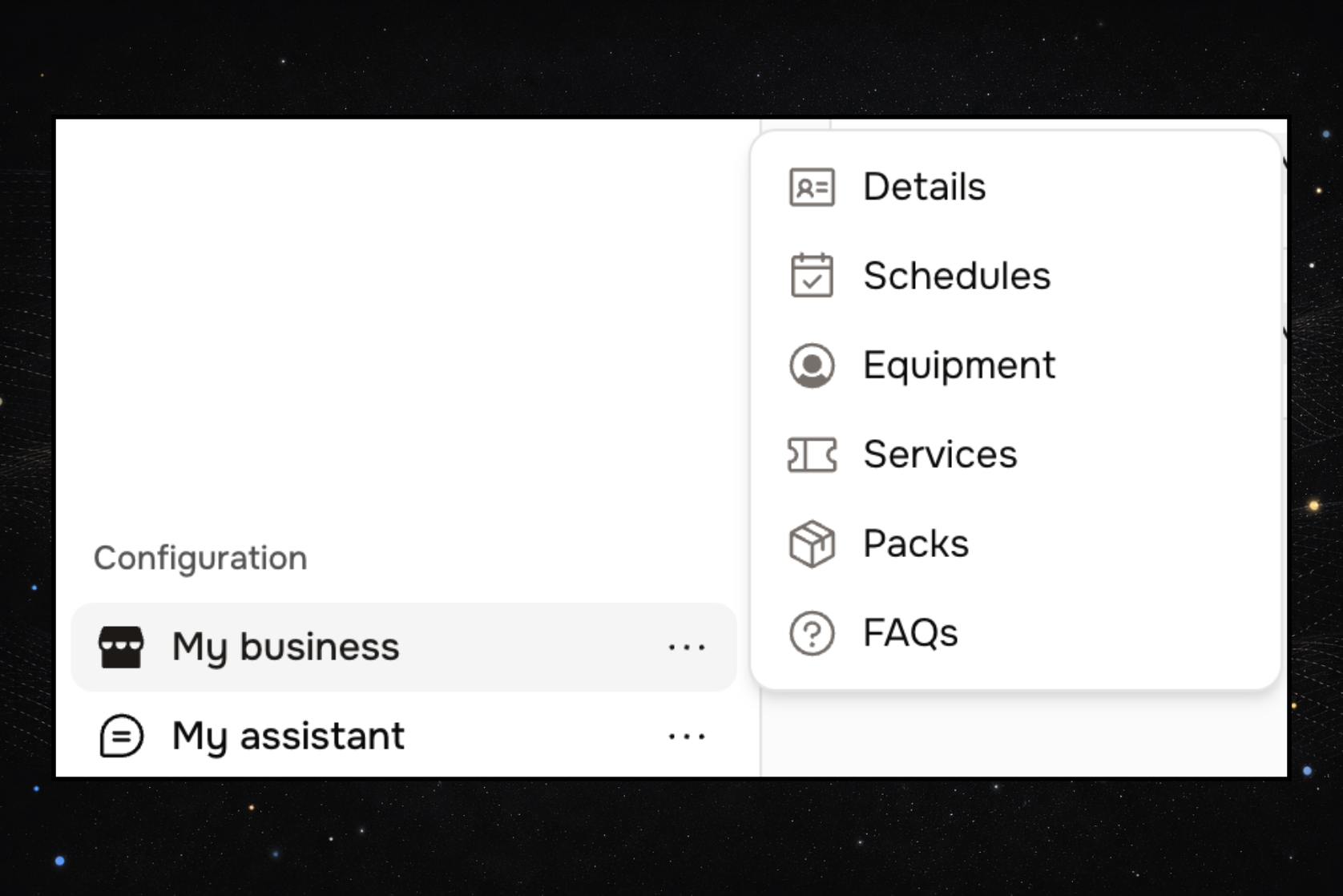
Inside Heydiga, the salon defines:
- business details and opening hours
- services and durations
- team members and availability
- practical rules around bookings, changes and cancellations
- frequently asked questions clients raise every day
This is not a CRM, this is so the agent knows everything it needs to know and can sort out everything for you and your business.
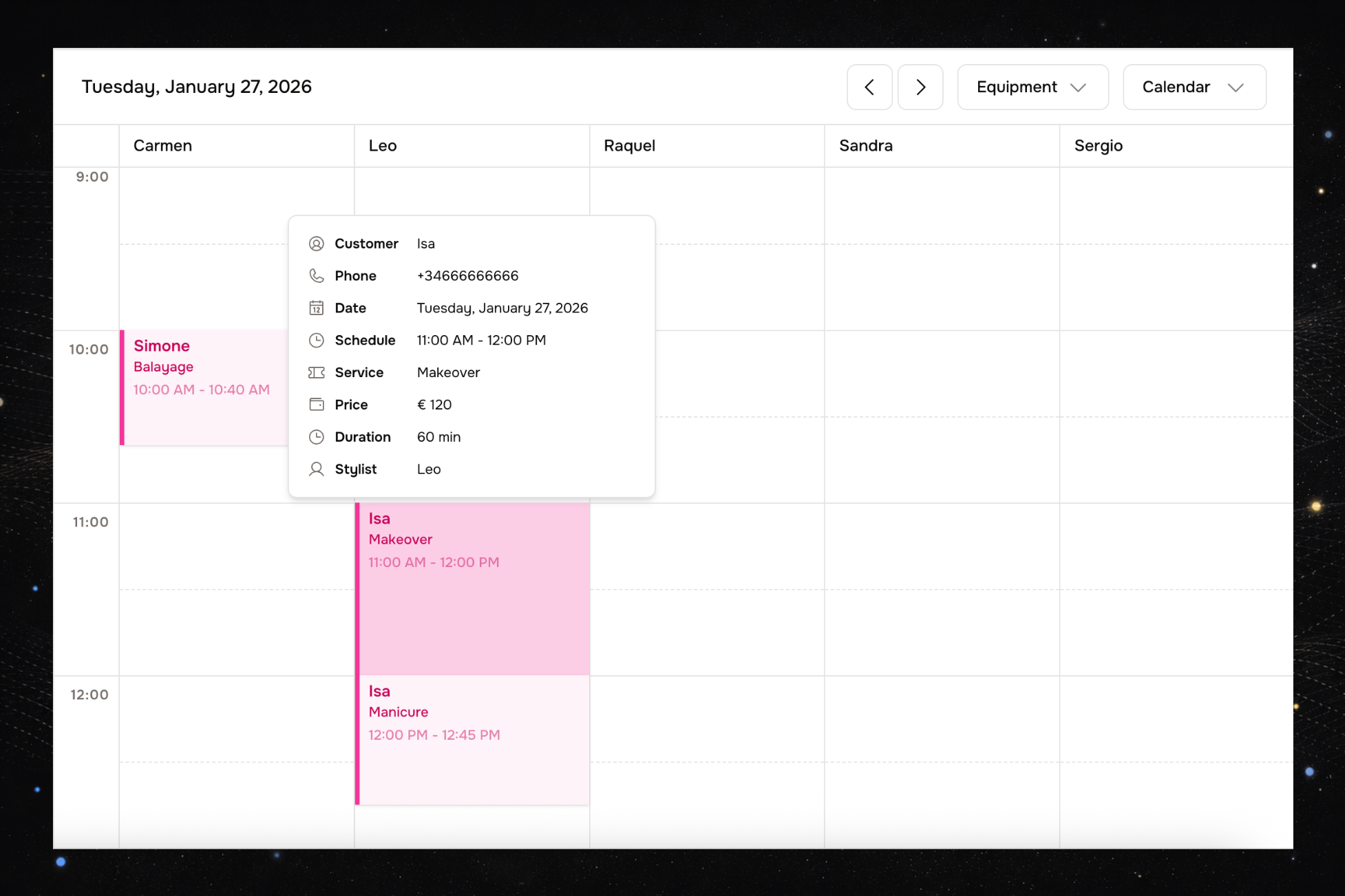
The calendar is part of that same environment. It shows real availability by stylist and service, and it updates automatically when appointments are booked, changed or cancelled.
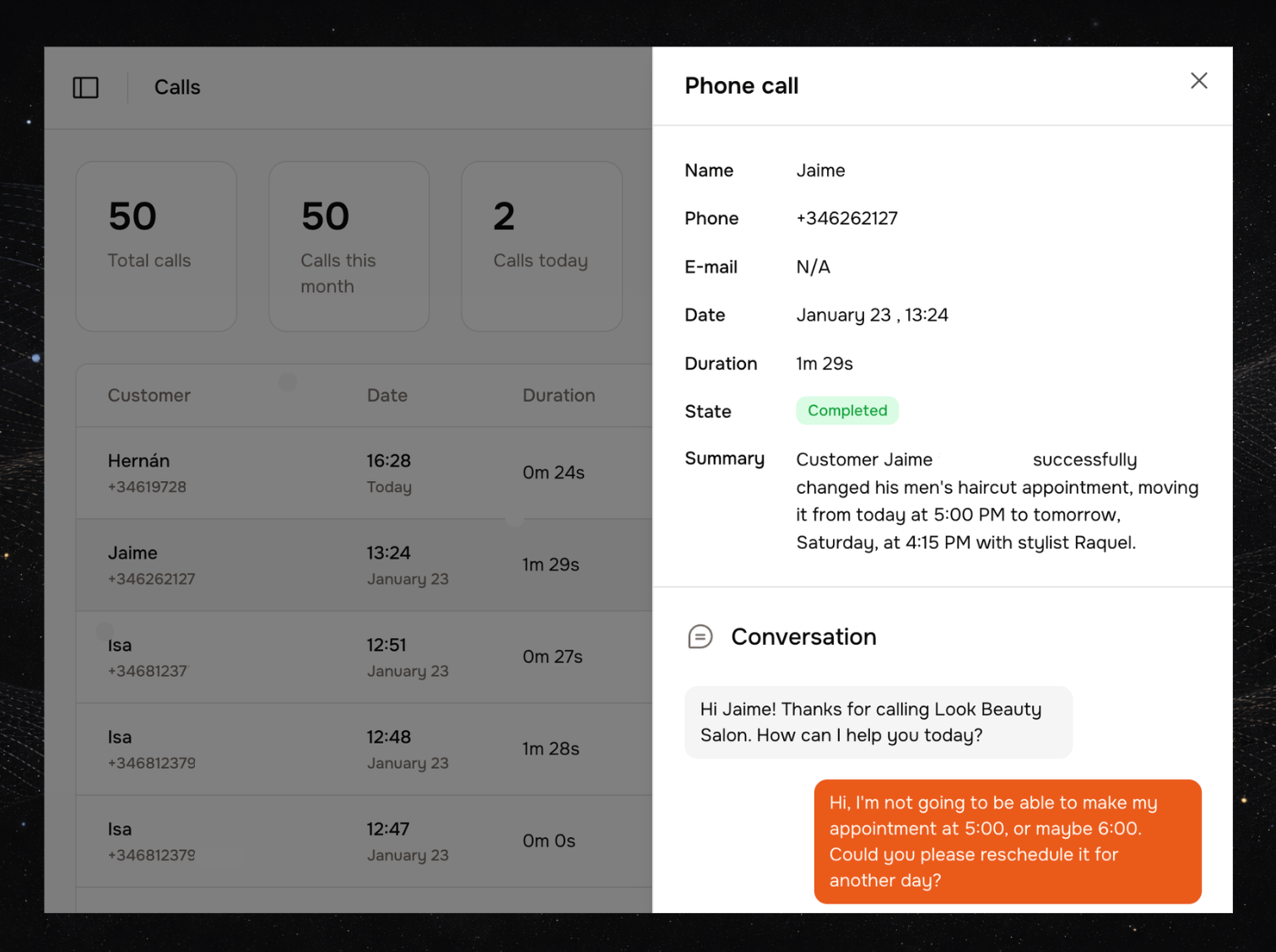
Calls and messages are handled and recorded with context. The salon can see who contacted them, when it happened, how long the interaction took and what was resolved, without having to rely on memory or notes.
Over time, this also builds a clear picture of clients and their history, which helps conversations start with context rather than from scratch.
What changes in a beauty salon’s daily operations when calls and bookings are handled together?
The most noticeable change is not that everything feels more automated, but that the salon is interrupted less often. The team can focus on the person they are attending to, while calls and messages are handled consistently in the background.
Over time, this usually means:
- fewer interruptions during services
- fewer missed or poorly handled calls
- more bookings outside opening hours
- a calendar that stays clean without constant checking
- clear revenue from missed calls and messages
Communication improves, not because there is more technology involved, but because the setup finally matches the reality of how a beauty salon works.
The goal is not to remove people from the process, but to let them focus on the moments where care, judgement and personal attention really matter.
Frequently asked questions about AI agents for beauty salons
Can an AI agent really handle bookings for a beauty salon?
Yes, as long as it uses the salon’s real services, durations, rules and availability.
Does this replace my calendar or booking system?
Heydiga includes the calendar and keeps it in sync with calls and messages, so everything related to bookings lives in one place.
What happens when a request is unclear?
The agent asks clarifying questions or hands the conversation over when human judgement is needed, rather than guessing.
Do clients need to change how they contact the salon?
No. Clients can continue calling or messaging as they always have. What changes is how those interactions are handled.
Is this only useful for large salons or chains?
No. Single-location salons often feel the impact even more quickly, because interruptions affect a smaller team immediately.