
How to automate bookings with AI agents (without harming customer service)


If you run a local service business, you have probably already tried to organise bookings in one way or another.
A booking link.
A shared calendar.
WhatsApp messages.
And still, the phone keeps ringing.
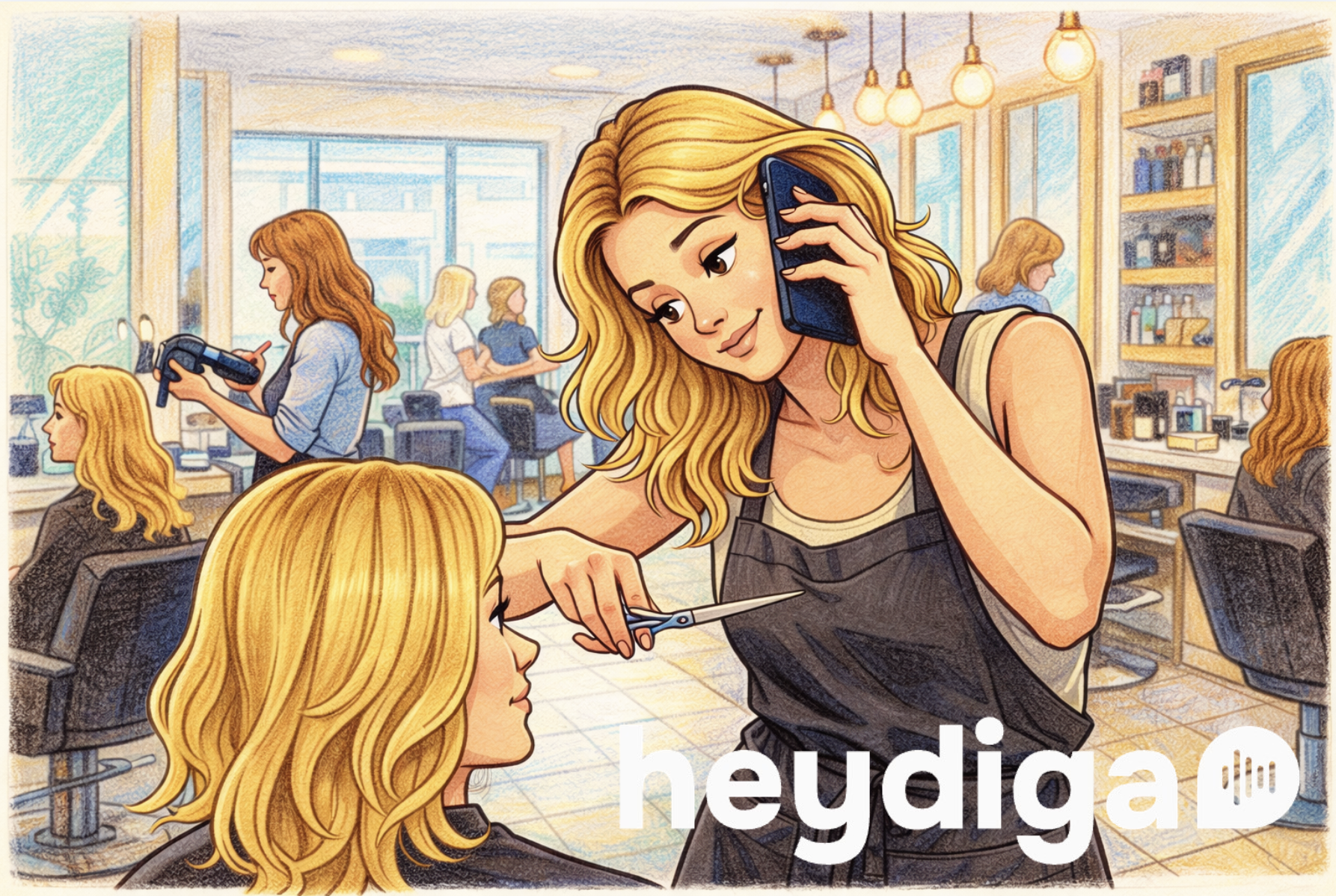
Calls come in while hands are busy, customers are waiting, or the place is full. Some requests are handled in a rush. Others are missed completely, especially outside opening hours.
Most of the time, the problem is not the lack of tools.
It is that business rules, availability and customer conversations are not connected.
Heydiga exists to solve exactly this.
Heydiga is the platform where a business defines how it works, where its agenda lives, and where calls and messages are handled using the same rules. One place to set the rules, one agenda to rely on, and one agent answering customers consistently.
Automation, done well, is not about adding one more system.
It is about removing the back-and-forth: reading a message, checking the agenda, asking someone, calling back, and updating everything later.
When those parts are connected properly, customers can book the way they already do, and the team gets fewer interruptions without service getting worse.
What actually needs to be connected to automate bookings properly
When days get messy, only three things really matter:
- one clear place where the business explains how it works
- one agenda that stays correct on its own
- customer channels connected to that same agenda and those same rules
In Heydiga, all three live together.
That is what makes automation reliable instead of fragile.
One place to define how your business works
Automation needs context. Not scattered notes.
Inside Heydiga, the business defines:
- what services exist and how customers usually ask for them
- how long each service takes
- which staff members can do what
- opening hours and location
It also includes the answers to the questions customers ask every single day: indicative pricing, preparation, basic policies, cancellations, or what to expect before a visit.
And then come the details that actually break agendas in real life:
- buffers for setup, cleaning or changeover
- resources such as chairs, rooms or bays
- rules for late arrivals and no-shows
- anything that makes a service longer or shorter than usual
When all of this lives in one place, the system does not guess.
It can act safely.
One agenda, no exceptions
Reliable automation only works with one source of truth for availability.
One agenda.
Not “the online one” and “the real one”.
Not “I’ll update it later”.
In Heydiga, the agenda lives inside the platform and updates automatically when someone:
- books
- cancels
- reschedules
- changes the service or the staff member
As soon as availability lives in more than one place, double bookings appear and customers lose trust.
If updating the agenda depends on someone remembering to do admin, it will fail. Not because the team is careless, but because the busiest moments are exactly when nobody has time.
Calls and messages follow the same rules
Customers do not behave in one single way.
Some use booking links.
Others send messages.
Many still call, especially when they are unsure or in a hurry.
Good automation does not force people into one channel.
It connects the channels they already use to the same agenda and the same business rules.
In Heydiga, the same agent handles phone calls and WhatsApp messages using the same information and the same availability. That is how interruptions go down without service quality going down with them.
How to automate bookings without damaging the experience
Automation usually fails in two ways:
- it forces people through rigid flows
- it pretends to know things it does not know
A setup that protects customer service does three things well:
- handles common requests with as little friction as possible
- asks a sensible question when information is missing
- knows when to hand the conversation to a person
The goal is not “no humans involved”.
The goal is “humans only where judgement is needed”.
What booking requests look like in real life
Across most local service businesses, the same situations repeat every day:
- booking a slot for a specific service
- cancelling or moving an appointment
- asking about opening hours, location or indicative pricing
- checking availability for a specific day or professional
- confirming what to bring or how to prepare
If these cannot be handled smoothly, the team ends up interrupted mid-service again.
When a request is unclear, accuracy matters more than confidence
This is where quality shows.
A good system does not guess.
It slows down and clarifies.
For example, in beauty services:
“I want highlights, but I’m not sure if balayage or babylights. My hair is curly. How long does it take?”
The right response is not to pick a slot blindly. It is to:
- ask one or two clarifying questions
- suggest a short consultation
- or pass the conversation to a team member
Guessing here does not just risk a wrong booking. It risks trust.
Why salons, restaurants and workshops feel this problem the most
Some sectors feel interruptions more than others.
In beauty businesses:
- hands are busy
- every call interrupts a service
- changes and cancellations are frequent
- demand spikes by hour and by day
In restaurants and workshops, timing and real availability matter just as much.
When calls and messages are properly connected to the agenda:
- interruptions drop
- more bookings happen outside opening hours
- the agenda becomes cleaner and more predictable
How to know if it is actually working
You do not need complex dashboards. A few signals are enough, and they all live inside Heydiga:
- percentage of requests resolved without staff intervention
- how many bookings happen when the business is closed
- bookings by channel (phone, WhatsApp, others)
- no-show rate and late cancellations
If you automate and do not measure, you are guessing.
Why bookings fail when information and availability are disconnected
Every request depends on context.
To answer “Do you have a slot today?”, the system needs to know:
- which service is meant
- how long it takes
- who can do it
- what availability is real
When business rules live in one place and availability in another, the system cannot be reliable.
Automation works when rules, availability and conversations operate from the same base.
That design principle is at the core of Heydiga.
A simple checklist before automating bookings
- Define services, durations, staff and basic rules in one place.
- Make sure there is one agenda and that it updates automatically.
- Connect the channels customers already use, especially phone and WhatsApp, to that agenda.
- Enable confirmations and reminders with easy rescheduling.
- Measure resolved requests, bookings by channel and no-shows.
Automating bookings is not about adding a bot.
It is about giving your business one place where decisions are made and one agent that can act on them consistently.
That is exactly what Heydiga is built for.
FAQs
Can an AI really handle booking calls for a salon or restaurant?
Yes, as long as the rules are clear.
When services, durations, staff availability and basic policies are defined in one place, an AI agent can handle most booking, cancellation and rescheduling requests reliably. When something requires judgement, it can pass the conversation to a person.
Will customers notice they are talking to an AI?
They will notice they are not waiting.
For most customers, what matters is getting an answer and a solution. When the agent understands the request, responds naturally and does not guess, the experience feels smoother than a rushed call.
Do I need to change how my business works to use Heydiga?
No.
The idea is not to change your operation, but to explain it clearly once. Your services, schedules, rules and usual questions live inside Heydiga, and the agent follows them consistently.
Can this work outside opening hours?
Yes.
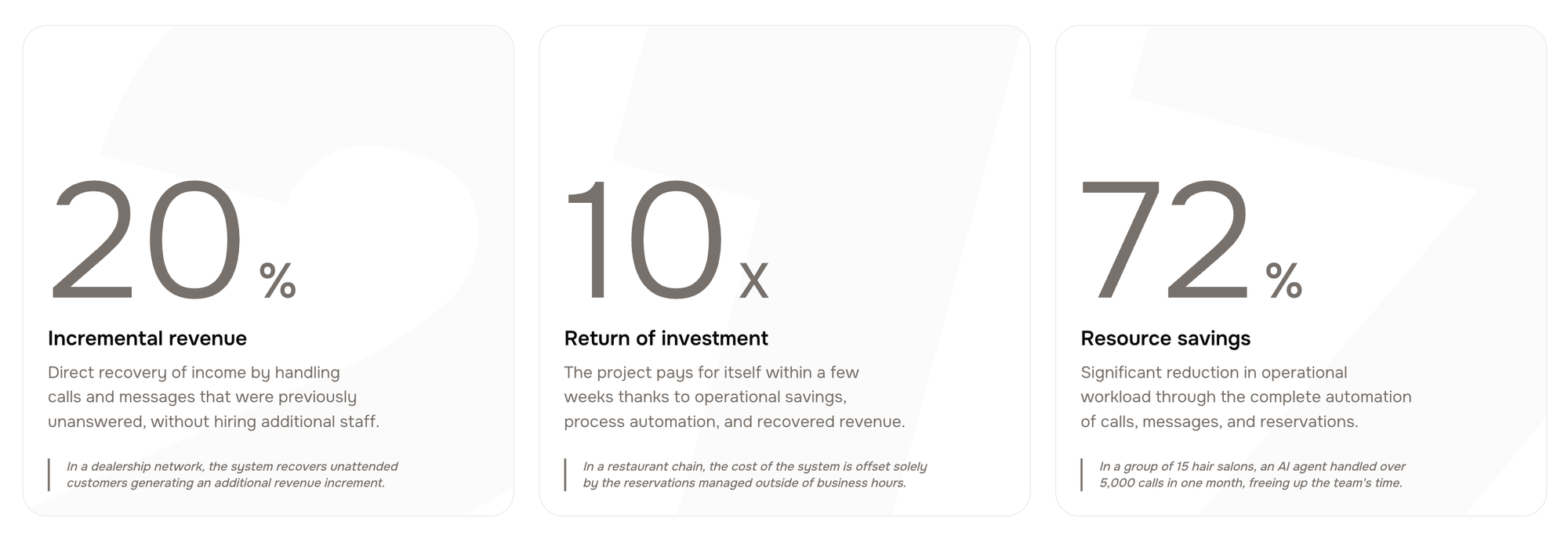
Many bookings, changes and questions happen when the business is closed. Handling calls and messages outside opening hours is often one of the fastest ways to recover lost bookings without adding staff.
What happens if a customer asks something unusual?
The agent does not guess.
If information is missing or the request is too specific, it asks clarifying questions or hands the conversation to a team member. Accuracy always comes before automation.
Is Heydiga only useful for big businesses or chains?
No.
Small salons, restaurants and workshops often benefit the most, because interruptions have a higher cost. The same setup also works for groups with multiple locations where consistency matters.
How long does it take to get started?
Usually, less than people expect.
Once the business rules, agenda and channels are set up, the agent can start handling calls and messages straight away. Most improvements come after seeing it work in real situations.
How do I know if it is actually helping?
You can see it in simple, practical signals:
fewer missed calls, more bookings outside opening hours, fewer interruptions during service, and a cleaner agenda.