
Top 7 AI Virtual Assistants for Auto Workshops & Car Dealerships in 2026: Which One Actually Helps?

If you run a workshop or a dealership service centre, you know what the phone is like.
It rings when you’re under a car. When the bays are full. When you’re at the counter. When someone is waiting for a quote. You tell yourself you’ll call back in five minutes, and suddenly it’s been thirty.
Then you check and it’s missed calls, WhatsApp messages, someone asking about an MOT slot, someone else asking if you can fit in brakes today. Some of them won’t try again.
It’s just the reality of the job.
So the question isn’t whether AI is “interesting”. The question is whether it actually helps in a workshop: fewer missed bookings, fewer interruptions, and less admin across calls and WhatsApp.
This is a shortlist of seven tools that stand out in 2026, ranked by how well they fit real automotive service businesses.
Quick verdict
- Best all-in-one for workshops and dealerships: Heydiga / DigaMotor. Rules, services, bays, technicians, diary. calls, WhatsApp and basic metrics in one place.
- Best if you want human backup built in: Smith.ai. Useful when calls often need a person, but you pay for it.
- Best budget entry point: My AI Front Desk. Covers basics, but deeper setup usually means extra tools.
- Best if you want something live quickly: Dialzara. Fast setup, lighter operational control.
- Best if your main issue is volume: Goodcall. Strong on handling calls, less of an end-to-end system.
- Best dealership-focused solution: Numa. Built for larger dealer groups, heavy on lead routing and DMS integration.
- Best auto repair specialist: AutoGenie.ai. Focused on quotes and appointments, less of a complete operations layer.
The difference you should pay attention to is simple: do you end up with one place to run the workflow, or a stack of tools that need constant stitching.
Table of contents
- Why auto workshops and dealerships are using AI assistants now
- What matters when choosing one
- The top 7 (ranked)
- What to measure in the first 30 days
- 5 FAQs
Why auto workshops & dealerships are using AI assistants now
Most service bookings, quote requests and schedule changes still come through phone calls and WhatsApp.
That’s how customers behave when they have a breakdown, when they need a quick price on tyres or brakes, or when they want an MOT slot without filling forms.
And those requests come in at the worst moments.
When the phone is a constant interruption, you get the same set of problems:
- missed calls when the bays are busy
- slow replies on WhatsApp when parts and availability are being asked
- reschedules turning into back-and-forth
- confirmations being inconsistent, which feeds no-shows
A useful assistant is the one that breaks that loop without frustrating customers.
What actually matters when you’re choosing one
Most tools can “pick up”. The difference is whether they can complete the job and leave the diary correct.
Here is what I looked for.
A simple checklist
- Can it handle quote requests, book service slots and reschedule without causing chaos?
- Can you define the operation properly (services, availability, technician shifts, rules...)?
- Do you get one place to see calls, messages and outcomes, or is it spread across tools?
- When it’s unsure, does it ask a sensible question or hand over cleanly?
- Does it actually fit automotive needs (urgent repairs, parts questions, MOT slots)?
A useful way to think about it
The assistant is the front door.
What matters is what sits behind it: the rules, the diary logic, the handover to humans, and the record of what happened.
If that layer is split across tools, the admin work doesn’t disappear.
| Rank | Platform | Best for | Strength | Main trade-off | Starting price (approx.) | Automotive focus | Runs diary natively | Needs integrations |
| 1 | Heydiga / DigaMotor | Workshops, dealership service centres | One operational layer for rules, services, bays, diary, calls & WhatsApp | Newer internationally, usage-based tiers | €199/month or enterprise pricing | Yes | Yes | No |
| 2 | Smith.ai | Teams needing human backup | AI + live agent handoff | Higher cost, relies on integrations | $95/month (self-service) / $500+ with agents | No | No | Yes |
| 3 | My AI Front Desk | Very small teams | Affordable basic call answering | Needs Zapier/external tools for deeper flows | $99–149+/month | No | No | Yes |
| 4 | Dialzara | Quick setup | Fast launch, natural voices | Light operational control | $29+/month | No | No | Often |
| 5 | Goodcall | High call volume | Reliable routing & volume handling | Not full end-to-end operations | $59+/month | No | No | Yes |
| 6 | Numa | Larger dealerships | DMS integrations & enterprise routing | Complex and higher cost | Custom pricing | Partially | Depends | Yes |
| 7 | AutoGenie.ai | Repair-focused centres | Repair quotes & appointment handling | Limited public info, not a full ops layer | Not publicly listed | Yes | Limited | Unclear |
The top 7 AI virtual assistants (ranked)
1) Heydiga / DigaMotor
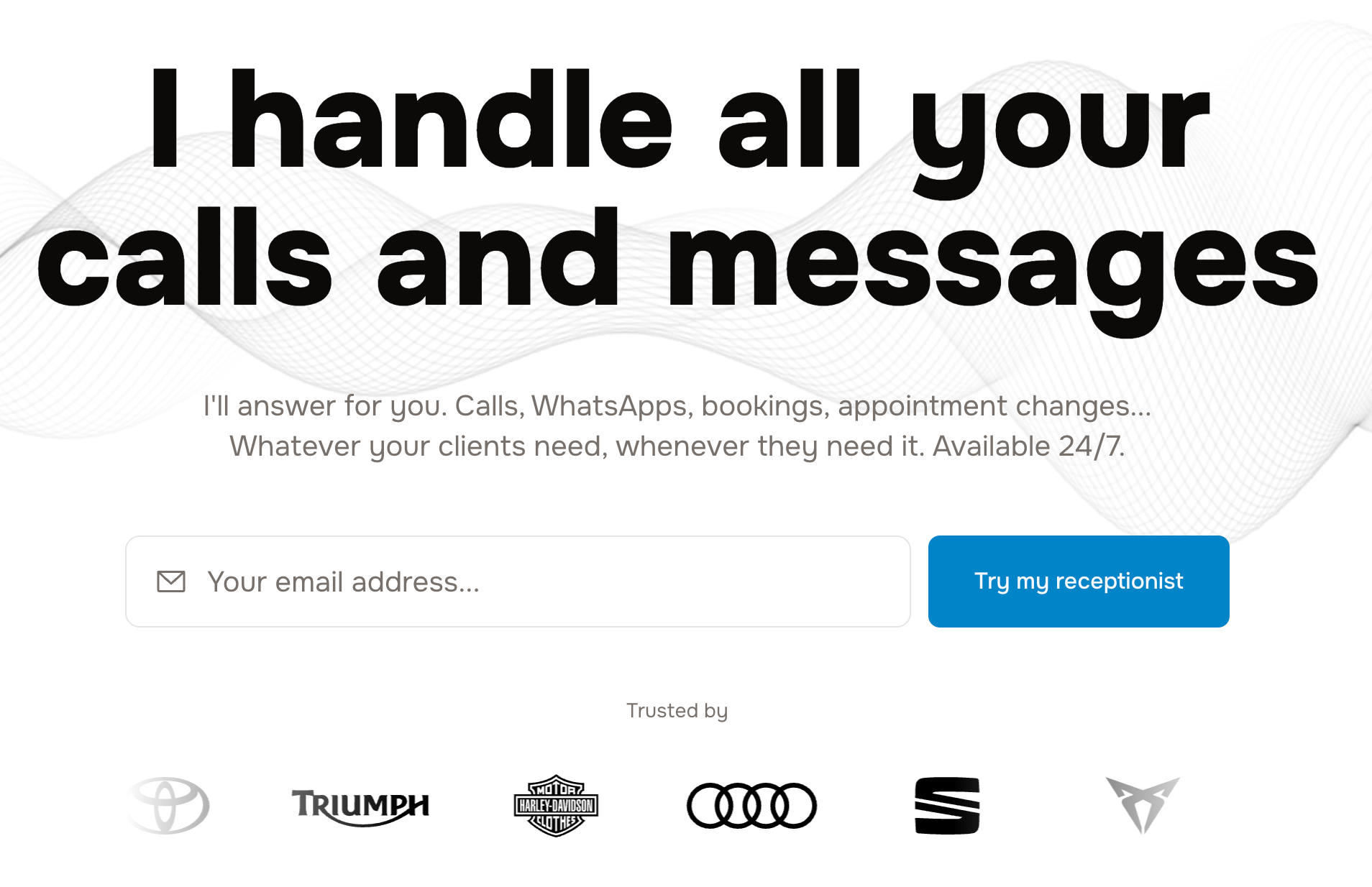
Best for: workshops, dealership service centres
Why it stands out: everything lives in one dashboard, built around how auto businesses actually operate
Heydiga / DigaMotor is the most practical option on this list if the goal is simple: stop losing bookings without adding more software.
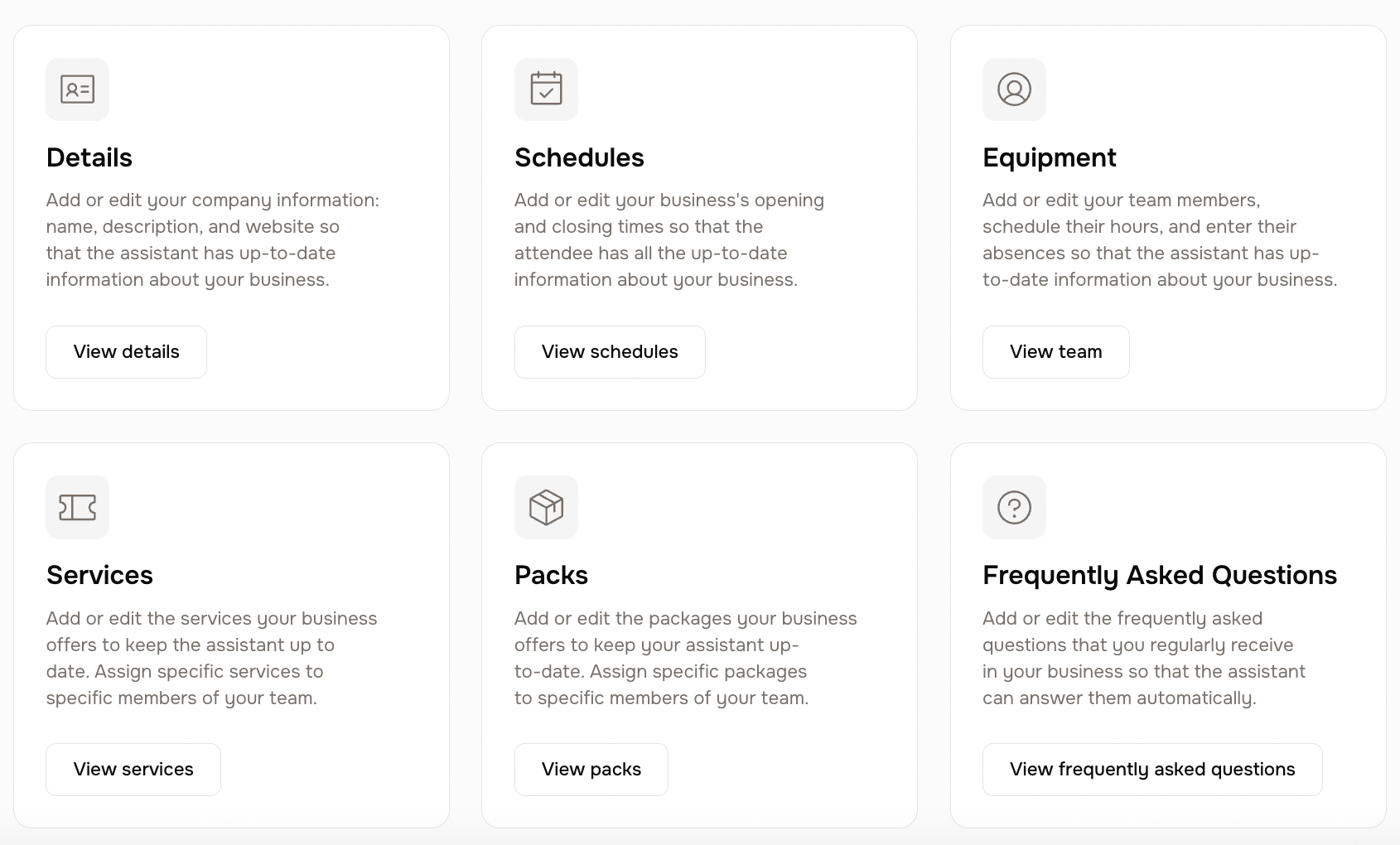
Most tools ask you to connect a voice system, a calendar, a CRM, Zapier, and then hope it all stays in sync. Here, the business itself is defined in one place.
You set:
- opening hours and exceptions
- services (oil changes, MOTs, brake repairs, diagnostics) and durations
- technician shifts and bay availability
- rules (for example: no urgent slots within 30 minutes of close)
Calls, WhatsApp messages, transcripts, the diary and basic metrics stay inside the same system.
DigaMotor is the automotive vertical. It understands repair questions, breakdown urgency, part queries and service types without needing to be “taught” from scratch.
Pros
- One operational layer instead of five disconnected tools
- Built for real workshop flows, not just “answering the phone”
- Clear structure for rules, bays and technicians
- Trusted by international brands like Triumph, Audi, Harley Davidson.
- Multilingual voice agents
Cons
- Newer internationally
- Heavy usage means higher tiers
2) Smith.ai
Best for: businesses that want human backup built in
Standout strength: AI plus live agents for complex or sensitive calls
Pros
- Clean handoff to a real person
- Good summaries and lead qualification
Cons
- Higher cost
- Needs integrations (calendar, CRM) to unlock full functionality
Good option if calls often get complicated. Less tuned for workshop operations specifically.
3) My AI Front Desk
Best for: small or budget-conscious teams
Standout strength: low cost and simple coverage
Pros
- Affordable
- Quick to set up
Cons
- Deeper flows require Zapier or extra tools
- Basic dashboard
Works if you just want someone answering calls. Not built as an operational core.
4) Dialzara
Best for: quick setup and natural-sounding voices
Standout strength: fast to launch
Pros
- Live in minutes
- Good voice quality
Cons
- Light business-rule control
- Often needs external calendar tools
Fine if speed matters more than structure.
5) Goodcall
Best for: places with constant inbound calls
Standout strength: handling volume reliably
Pros
- Strong on routing and call volume
- Solid call management
Cons
- More routing-focused than workflow-focused
- Rules and metrics live in separate places
Reliable for busy dealerships, but not an end-to-end operations system.
6) Numa

Best for: dealerships with sales + service
Standout strength: enterprise-grade routing + DMS integrations
Pros
- Strong lead capture
- Integrates with dealer management systems
Cons
- Higher cost
- Built for larger groups
Makes sense for bigger dealer networks. Likely too complex for independent workshops.
7) AutoGenie.ai
Best for: auto repair & service centres
Standout strength: focused on repair quotes and appointments
Pros
- Tailored to service centres
- Handles common repair enquiries
Cons
- Limited public pricing info
- Not a full operational layer
Good for repair-specific flows, but less complete as a central system.
What AI features do you actually need in a workshop phone-answering system?
Most people fixate on the wrong thing: whether it sounds human.
Voice quality matters. But that’s not where money is made or lost. What matters is whether it removes work from the team.
Here are five things that actually matter.
It completes the job
Booking, rescheduling, confirming, quoting. If someone still has to finish the task manually, you didn’t remove admin. You moved it.
You can define how the workshop runs
Services, durations, bays, shifts, constraints. If the rules aren’t clear and centralised, the system will guess. And guessing creates mistakes.
The diary stays accurate
No double-booked bays. No ghost slots. No manual copy-paste between systems. Changes should reflect immediately.
It knows when to step aside
If something needs judgement, it hands over cleanly with context. No bluffing.
It leaves a usable record
What got booked. What changed. What keeps repeating. That’s enough.
If those five are in place, everything else is secondary.
What to measure in the first 30 days
If you want to know whether it’s working, don’t measure how “smart” it sounds.
Measure outcomes.
- Bookings captured outside opening hours
- Quotes sent without someone calling back
- Reschedules completed without extra admin
- No-show rate before vs after confirmations
- The most repeated questions customers ask
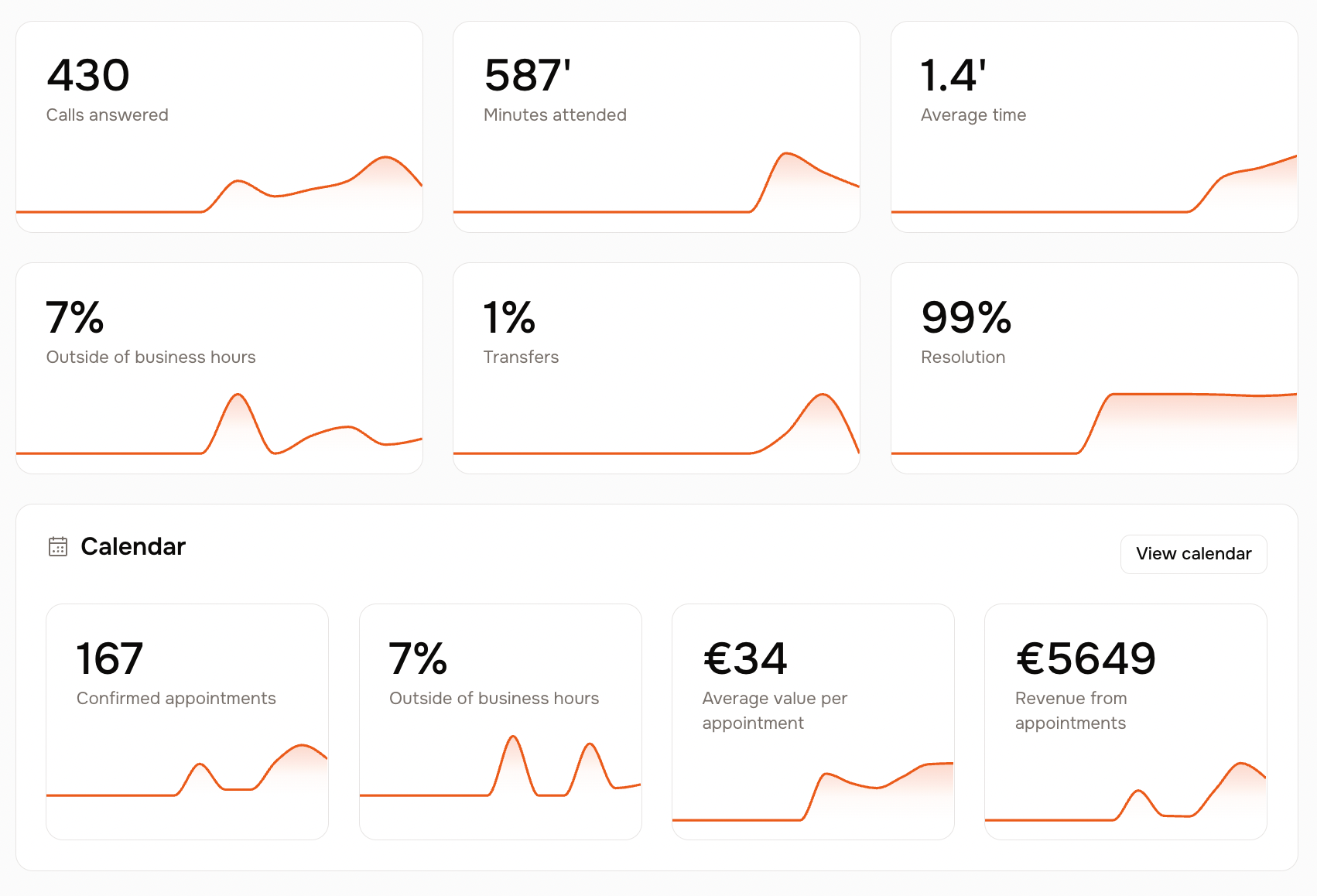
If those improve, the assistant is doing real work.
5 quick FAQs
Do I need this if I already have a receptionist?
Often yes. The receptionist struggles most during peak hours. An assistant absorbs routine calls so the human can focus where judgement is needed.
What happens when it doesn’t know something?
It asks a simple clarification or hands over properly. Guessing breaks trust.
What’s the biggest mistake when choosing a tool?
Buying something that answers calls but leaves your operations fragmented. If you still have to stitch systems together, you haven’t solved the real problem.
What’s the quickest win for most workshops?
Bookings, reschedules and the top repeated questions. That’s where interruptions live.
Why does “one dashboard” matter so much?
Because coordination is the real pain. When rules, diary and conversations sit in one place, everything becomes consistent.
The short takeaway
Workshops don’t usually lose money because they lack software.
They lose money because demand leaks through the phone.
The strongest assistants aren’t the ones that sound impressive. They’re the ones that quietly run the repetitive layer of the business without breaking the workflow.
That’s why Heydiga / DigaMotor ranks first here. It’s built around how workshops actually operate, not around how a demo sounds.
Also, heydiga has other verticals for each use case. Including clinics, restaurants, hotels, etc. Read this article to know more about other verticals.
If the phone is still your biggest bottleneck, you already know where the solution is.